
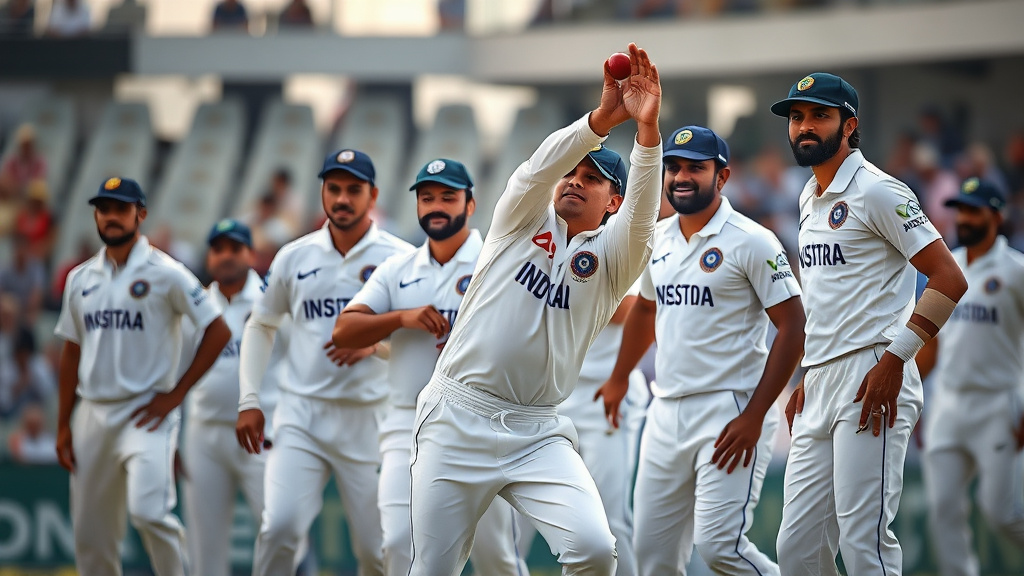
India’s quick bowling squad has established itself as a powerful competitor in international Test cricket, revolutionizing how the game is played with their exceptional skill and aggression. From devastating pace attacks that break down opposing batsmen to consistent performances across varying match conditions, Indian pacers have proven their mettle on the world stage. This article explores how India’s pace bowling transformation has made them serious competitors in the Test format, analyzing the leading bowlers, their strategic innovations, and the influence they’ve had in recent world events.
The Emergence of India’s Speed Bowling Unit
India’s fast-paced bowling revolution represents a fundamental shift in the nation’s cricket culture, breaking free from longstanding focus on spin bowling. Over the previous ten years, Indian pacers have demonstrated impressive consistency and proficiency across all game formats, proving themselves to be match-deciding players on the global stage. Players like Jasprit Bumrah, Mohammed Shami, and Ishant Sharma have demonstrated technical mastery and psychological strength, producing match-winning displays in crucial Test matches against cricket powerhouses. This evolution demonstrates deliberate investments in talent cultivation and modern coaching methodologies.
The emergence of a strong fast bowling unit has fundamentally altered India’s Test cricket strategy, helping them to succeed in varied conditions worldwide. Young talents like Siraj and Prasidh Krishna bring fresh energy and aggression to the bowling attack, supporting experienced campaigners. This multi-tier strategy maintains consistent performance and continuity in performance. The joint efforts of these bowlers has played a major role to India’s improved Test rankings and their competitive edge in international competitions, marking a defining era in Indian cricket history.
Leading Players in the Fast Bowling Unit
India’s fast bowling attack comprises elite performers who have regularly produced match-deciding results on world cricket platforms. These accomplished pace bowlers combine raw pace with technical proficiency, adapting seamlessly to varying pitch conditions across different venues. Their joint performance have established India as a dominant force in Test matches, commanding respect from competing countries. Each player brings unique strengths, from attacking short-pitch delivery to subtle variations that deceive opposition batsmen. Their influence extend further than statistics, motivating emerging talent and enhancing Indian cricket’s performance levels globally.
Bumrah’s Influence
Jasprit Bumrah serves as India’s premier fast bowler, transforming fast bowling with his unconventional technique and outstanding control. His ability to deliver yorkers with regularity and execute death bowling has made him invaluable across all cricket formats. In the Test format, Bumrah’s displays have proven key to obtaining significant triumphs against elite opposition. His unconventional bowling action and intelligent bowling strategies have earned him recognition as one of cricket’s most complete bowlers. Bumrah’s role in the squad considerably bolsters India’s bowling attack, providing both experience and innovation.
Beyond pure pace, Bumrah’s understanding of the game sets him apart from other bowlers. He demonstrates outstanding flexibility, adjusting his strategy based on match circumstances and rival shortcomings. His reliability under pressure, particularly on flat pitches, highlights his technical excellence. Bumrah’s coaching of emerging talent has developed a culture of excellence within the Indian cricket team. His accomplishments have transformed perceptions for modern fast bowlers, demonstrating that precision and strategy matter as much as sheer velocity in Test match success.
Shami’s Reliable Performance
Mohammed Shami exemplifies consistency and durability in India’s fast bowling unit, delivering consistent performances across numerous international campaigns. His ability to swing the ball effectively in both new-ball and middle-overs phases makes him remarkably adaptable. Shami’s familiarity with varying match conditions has proven invaluable during crucial Test series. His dedication and commitment have established him as a pillar of India’s bowling strategy. Despite facing injuries throughout his career, Shami has demonstrated remarkable resilience, returning stronger and more determined on every occasion.
Shami’s recent performances have strengthened his status as a game-changer capable of delivering under pressure. His bowling blends pace with movement, creating constant challenges for rival batters. In recent international competitions, Shami has showcased improved fitness and fresh intensity, playing a key role in India’s Test victories. His grasp of game situations and strategic insight strengthen India’s overall bowling approach. Shami’s consistency offers stability to the pace bowling group, allowing younger bowlers to build self-assurance and perform meaningfully to team success.
Tactical Strategies and Performance Outcomes
India’s quick bowlers have reshaped their strategic method in Test cricket, employing tactical adjustments that exploit pitch conditions and batsman weaknesses. The team employs aggressive short-pitched bowling combined with death bowling variations to destabilize batsmen. Captains have adopted strategic rotation that optimize bowler performance while handling fatigue in long tournament runs. This comprehensive strategy has proven notably impactful in domestic pitches, where spinners complement quick bowling seamlessly. The teamwork of quick bowlers creates sustained pressure, pushing opposition batsmen into defensive positions and producing key wickets at crucial stages.
Recent match results demonstrate the effectiveness of India’s bowling strategies across multiple global cricket grounds. Against traditional powerhouses, Indian fast bowlers have consistently delivered match-winning performances, claiming crucial wickets during pivotal moments. Their ability to adapt to varying pitch conditions—from seam-friendly surfaces in England to bouncy tracks in Australia—showcases strategic adaptability and skill development. Data examination shows better control figures and bowling efficiency versus previous decades, indicating enhanced precision and aggression. These performances have positioned India as authentic Test cricket competitors, able to perform successfully against all opposition regardless of location or conditions.
Upcoming Opportunities and Development
India’s rapid bowling attack stands at an promising juncture with tremendous potential for sustained growth and excellence. The development of young talents like Arshdeep Singh, Prasidh Krishna, and Yash Dayal together with established stars guarantees a sustainable pipeline of quality pacers. With improved training methodologies, sports science application, and enhanced fitness regimens, India’s bowling infrastructure continues to strengthen. The BCCI’s dedication in creating bowling academies and talent identification programs promises to uphold India’s dominance in international Test cricket for the foreseeable future.
Looking ahead, India’s fast bowling unit is positioned to establish fresh standards in Test cricket dominance. The blend of expertise from veterans and hunger from emerging players fosters a vibrant culture fostering innovation and excellence. As India prepares for upcoming World Test Championship campaigns and international fixtures, their pace arsenal remains a critical asset. Sustained emphasis on adjusting to varying surface types, refining bowling strategies, and developing emerging players will ensure India remains a formidable force, equipped to compete against any opposition and winning matches in diverse environments across the globe.
